Zero Export Solar in Karachi: When Net Metering Isn’t an Option
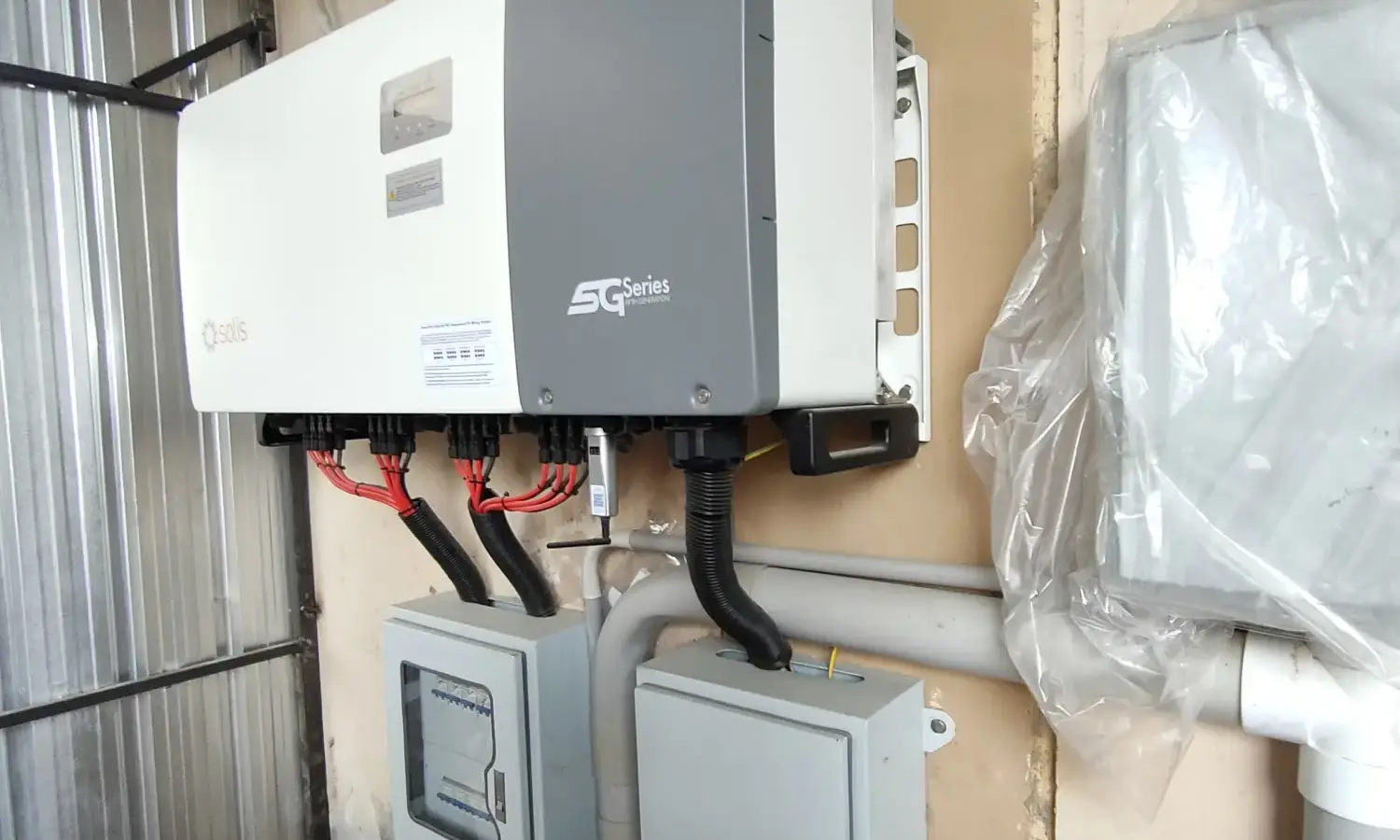
A college had paid a local installer Rs. 10 million to Rs. 13 million for a 100 kW system built for net metering. We asked how they were limiting what went back to the grid. The answer: they keep dust on the panels and don’t wash them, so generation stays low. That is a real answer we got from a real site. It is also the reason this guide on zero export solar exists, because there is a proper way to do this and it has nothing to do with dust.
What Is Zero Export Solar?
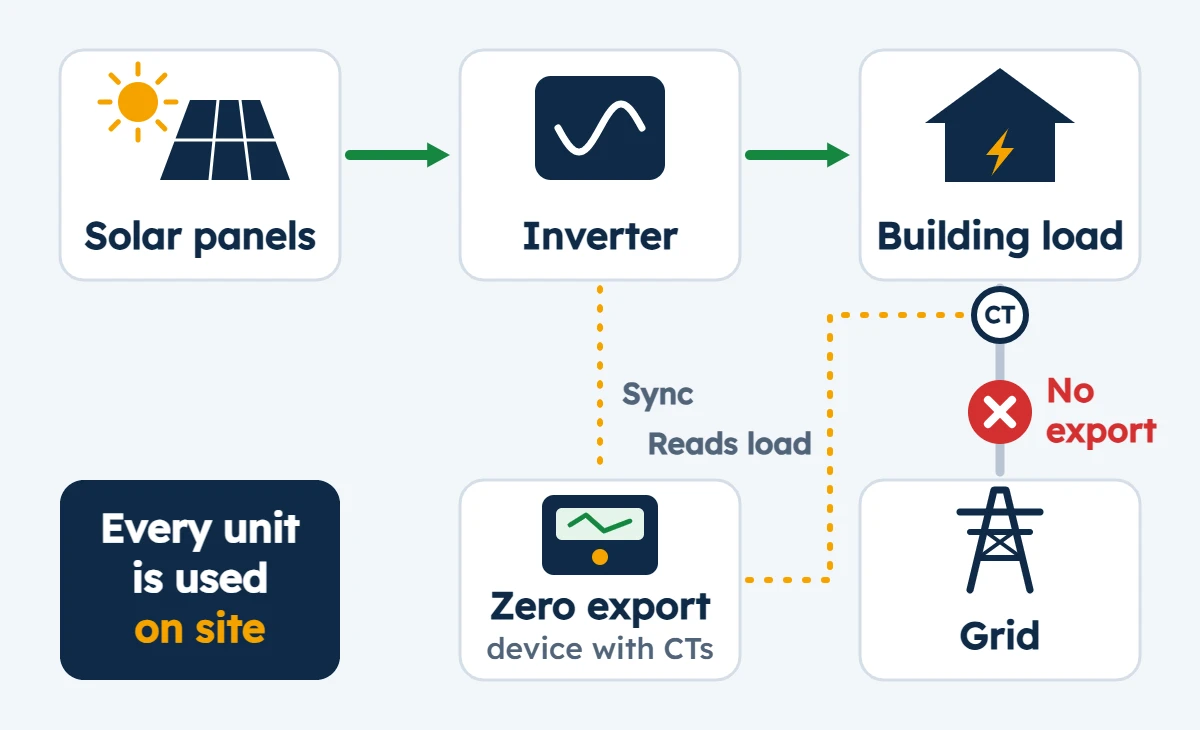
A zero export system stops your inverter from sending surplus solar power into the grid. A zero export device with CTs (current sensors) at your main supply reads how much the building is using, moment by moment, and the inverter matches its output to that load. Every unit it produces is used on site. Nothing flows back to K-Electric, so you do not need an export agreement or a reverse meter.
Why Dust Is Not an Export Limiter
Dirty panels produce less all the time, whether the building needs that power or not. You lose generation you paid for on the days your load is high. And on a day when the building is empty, dusty panels still produce more than it is using, and that power still has somewhere to go.
A zero export device does the opposite. It analyses the load and holds back only what would have gone to the grid. Clean panels, full output whenever the building can use it.
That college had no zero export device at all, and the system itself was not installed properly. They were just running it somehow. We explained this to them and they had us do the full setup: the zero export device, the CTs, syncing it with the inverter, commissioning, and the data on their phone so they can see what the system is doing. We have more zero export projects in progress now.
When Zero Export Makes Sense
- Rented property or a bill in someone else’s name: net metering paperwork is harder; zero export needs none of it.
- Daytime-heavy businesses, colleges and factories: if most of the power is used while the sun is up, little would be exported anyway, so zero export captures most of the saving.
- Waiting for net metering approval: the system can run in zero export mode from day one and switch to export once the agreement is in place.
- Sanctioned load issues: if increasing the sanctioned load is not practical right now, zero export avoids the net metering requirement.
On a single-phase connection, you don’t need this setup. K-Electric net metering needs a three-phase connection, but a single-phase home or shop can still cut its bill without zero export. The inverter handles it on its own, with no separate device. The zero export device is for on-grid systems.
What You Give Up
With zero export, surplus power the building cannot use is simply not produced. On a sunny afternoon with a low load, the inverter throttles back. With net metering, that surplus would earn credit on your bill (under the NEPRA net billing rules for new agreements since February 2026, as covered in net metering vs net billing). So zero export suits buildings whose daytime use is close to what the system produces. Oversizing a zero export system wastes panels.
Hybrid Systems Don’t Need It
A hybrid system already does this on its own, so a zero export setup is not necessary there. It stores the surplus in the battery and uses it in the evening or during load shedding. This is often the best setup for homes that cannot get net metering: the battery does the job the grid would have done.
What a Zero Export Setup Needs
- An on-grid inverter that supports export limiting.
- A zero export device with CTs installed at the main supply point.
- The device synced with the inverter.
- Commissioning and testing under real load, so the inverter reacts fast enough when the load changes.
The last point is where most problems come from. A badly set limit either leaks power to the grid or cuts output more than it should. Proper inverter commissioning checks this under real load.
Can an Existing System Be Converted?
Often, yes. The college above is exactly that case: a system another company installed, with the zero export setup added afterwards. If the inverter supports export limiting, we can usually add it. We set up zero export systems on new installations and on systems installed by others, including large commercial inverters.
Ask Before You Pay
That college spent more than a crore on solar and nobody explained how the system should be controlled. It happens because some local installers don’t have the technical knowledge, and some companies stop answering the phone once the payment is done. Before you sign, ask how export will be handled, who will commission the system, and who picks up the phone a year later. We stand behind our work, and we will still answer.
Frequently Asked Questions
Does zero export work during load shedding?
No. Zero export is for on-grid systems, and an on-grid inverter switches off when the grid goes down. If you need power through load shedding, you need a hybrid system with a battery, and a hybrid does not need a zero export setup.
Does zero export save as much as net metering?
Not if you produce a lot more than you use during the day. Zero export saves on every unit you use on site; net metering also credits the surplus. For buildings with high daytime use the difference is small.
Can I limit export by not washing my panels?
No. Dust cuts your generation all the time and does not respond to your load at all. A zero export device limits only what would have gone to the grid. Keep your panels clean.
Can I switch from zero export to net metering later?
Yes. Once the net metering agreement and meter are in place, the export limit is removed in the inverter settings.
Do I need a battery for zero export?
No. The zero export setup is for on-grid systems, which have no battery. If you want to store surplus power for the evening and load shedding, that is a hybrid system, which limits export on its own.