AC & DC Earthing Services In Karachi
Get Free Quote WhatsApp UsExpert AC & DC Earthing Services in Karachi.
K-Electric requires two separate earthings for net metering, AC and DC, each tested against a resistance threshold on survey day. We use full copper exclusively, not the cheaper mixed-metal alternatives that degrade over time and cause survey failures months after installation.
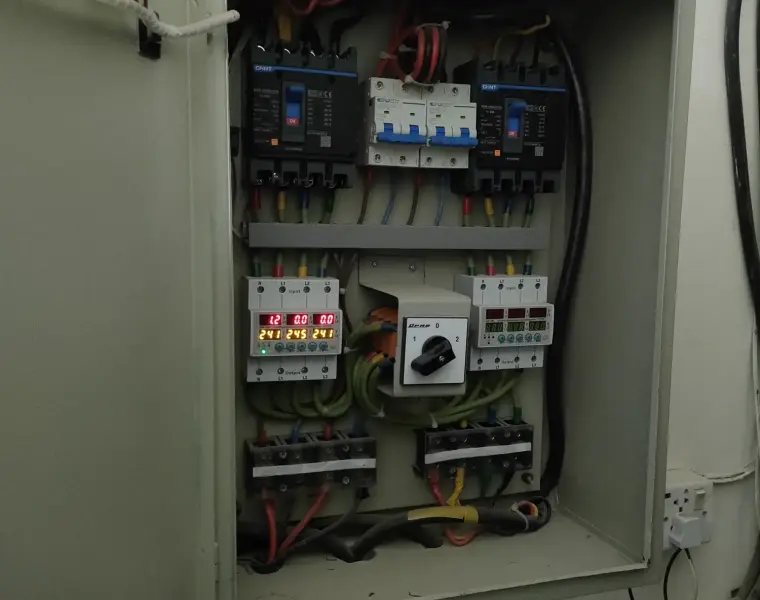
Why Earthing Quality Actually Matters
Earthing is a safety system first, a shock hazard risk if done poorly, not just a compliance checkbox. It's also frequently misunderstood technically, poor or incorrectly separated AC/DC earthing disguises itself as something else entirely, insulation resistance errors, unexplained trips, faults that clear and return repeatedly. Most homeowners assume it's an inverter problem. It's one of the most common misdiagnoses in solar systems across Karachi.
Full Copper Earthing, No Shortcuts
SunnyPath Energy is a Partnered AEDB Certified (Category C1) solar EPC company. We use full copper earthing exclusively on every installation, cheaper mixed-metal alternatives degrade and climb above the 5 Ohm resistance threshold over time, causing survey failures that only surface months after installation, when it's far more expensive to fix.
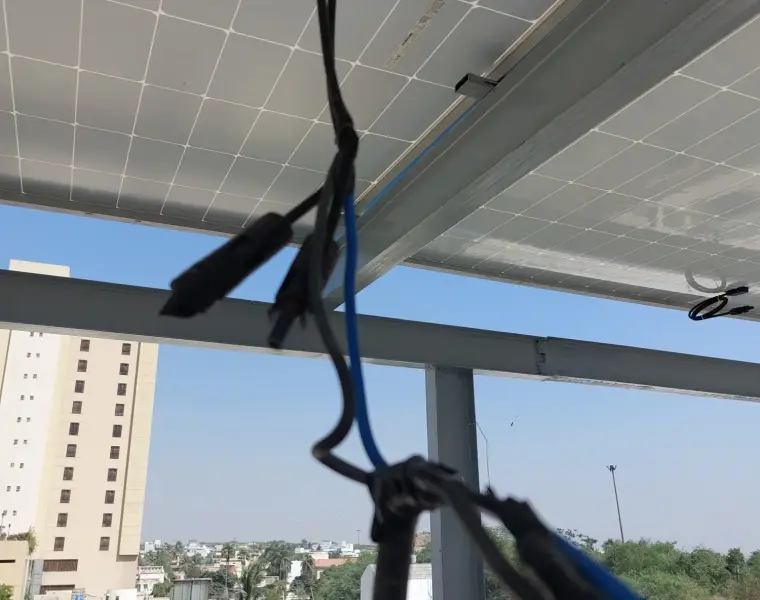
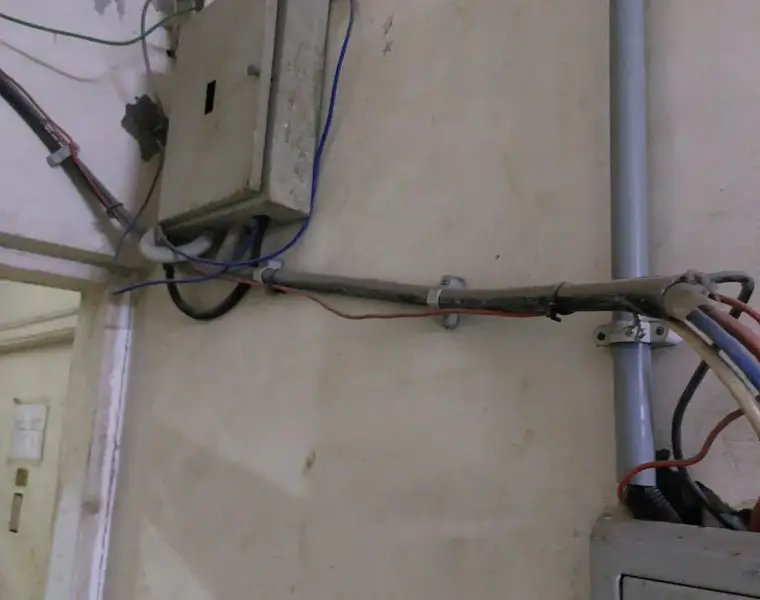
Earthing Isn't Just Compliance, It's Safety
If you're washing your solar panels on the roof and the earthing is poor quality or improperly installed, a fault anywhere in the system can pass current through water and put you at real risk. Good earthing isn't optional, it's what keeps a routine cleaning job from becoming dangerous.
Earthing checks are part of our solar maintenance & AMC visits →
How We Do It: Site Assessment to Documentation
Professional AC & DC Earthing Services
- Site assessment: we evaluate soil conditions, since ground conductivity directly affects what earthing method and depth will actually achieve a low resistance value.
- Separate AC and DC earth installation: full copper material, correctly separated as required.
- Resistance testing: we test and confirm the value is comfortably below the 5 Ohm threshold before considering the job complete.
- Documentation: if you’re planning to apply for net metering, our earthing work is done to the standard K-Electric’s survey team will test for.
This isn’t a formality, earthing is one of the two most common reasons net metering applications get rejected or delayed, alongside sanctioned load being lower than system capacity.
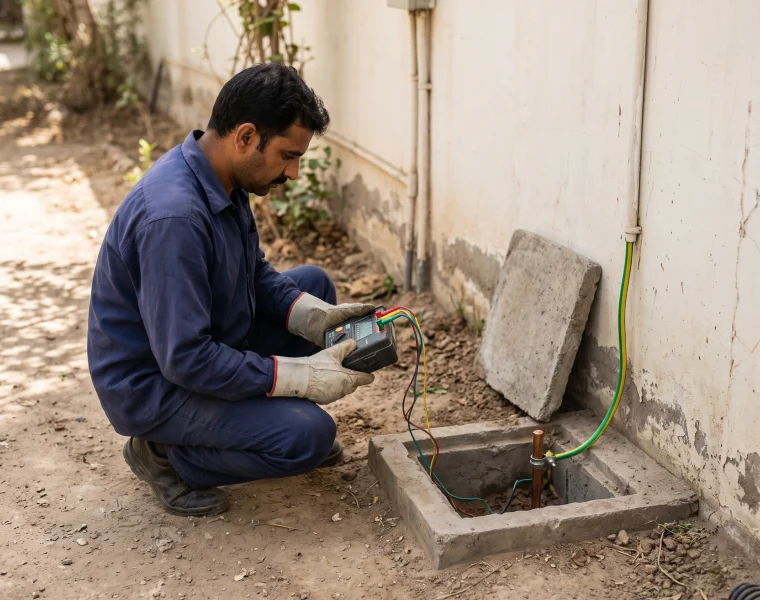
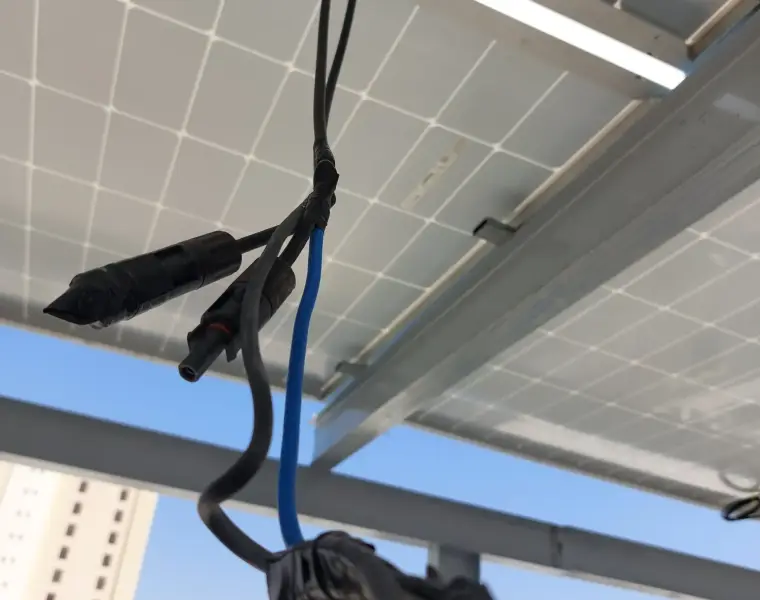
Built to Last, Not Just to Pass Inspection
Mixed-metal earthing can pass an initial survey and still fail within months, once resistance climbs back above the threshold as the metal degrades. We use full copper specifically because it holds its resistance value over time, so your system stays compliant long after the K-Electric survey, not just on the day it's tested.
We Check Earthing on Nearly Every Repair Call
When we're called out for an inverter that's acting up, insulation resistance errors, trips that clear and return, earthing is one of the first things we check, precisely because it's so often the actual root cause. It's a pattern we've seen enough times that we no longer assume the inverter is guilty until earthing's been ruled out.
Your Solar Journey in 4 Steps
Effortless Solar Journey with SunnyPath Energy in 4 Simple Steps
-
Step 1
Book a Survey
We visit your property to assess roof orientation, shading, structural condition, and your actual electricity usage before recommending anything.
-
Step 2
Get a Quotation
A detailed quotation based on your survey, sized to your usage, not a generic package, with transparent system specs and Tier-1 equipment named upfront.
-
Step 3
Installation
2 to 5 days on-site for a typical residential system, Tier-1 panels and inverter installed, tested, and commissioned before we call the job done.
-
Step 4
Enjoy Savings
Ongoing generation monitoring and 1.5 years of free after-sales support, so savings continue long after installation day.
Client Reviews
Words from Our Clients
SunnyPath Energy is rated 4.9 out of 5 from 15 reviews on Google.
Not Sure If Your Earthing Is Actually Compliant?
Related reading: Net Metering in Karachi — Complete 6-Step Guide | SunnyPath Energy
Frequently asked questions
01Can poor earthing actually be dangerous?
Poor earthing is dangerous, not just a compliance issue: it creates a real shock risk. For example, if there's a fault while you're washing your own panels, proper grounding is what keeps you safe. That's separate from whether a net metering application passes.
02What earthing standard does net metering require?
K-Electric requires a minimum of two separate earthings for net metering, one for AC and one for DC, with resistance below 5 Ohms, tested physically on survey day. SunnyPath Energy uses full copper earthing exclusively, since cheaper mixed-metal alternatives degrade and climb above this threshold over time, causing survey failures months after installation.
03Why do net metering applications get rejected or delayed?
The two most common reasons net metering applications get rejected or delayed are sanctioned load being lower than system capacity, and technical failures during the K-Electric survey: usually the system not alarming correctly when the grid is cut, earthing resistance above 5 Ohms, or improper AC/DC separation.
04Why does faulty earthing often get mistaken for an inverter fault?
Poor or incorrectly separated AC/DC earthing frequently disguises itself as an inverter fault, causing insulation resistance errors, unexplained trips, and faults that clear and return repeatedly. SunnyPath Energy checks earthing on nearly every repair call.
05Does SunnyPath Energy help with NEPRA/K-Electric net metering approval?
SunnyPath Energy manages the entire net metering process: pre-application compliance checks, documentation, submission, coordinating the K-Electric survey, and following up until the reverse meter is installed and live.
06What does a SunnyPath Energy maintenance visit actually check?
A SunnyPath Energy maintenance visit checks generation and performance versus expected output, breaker health, MC4 connector condition, wiring integrity, mounting structure stability, and corrosion or structural wear.