Zero Export Solar Setup in Karachi, for Every Inverter Brand
Get Free Quote WhatsApp UsUse All Your Solar, Send Nothing to the Grid
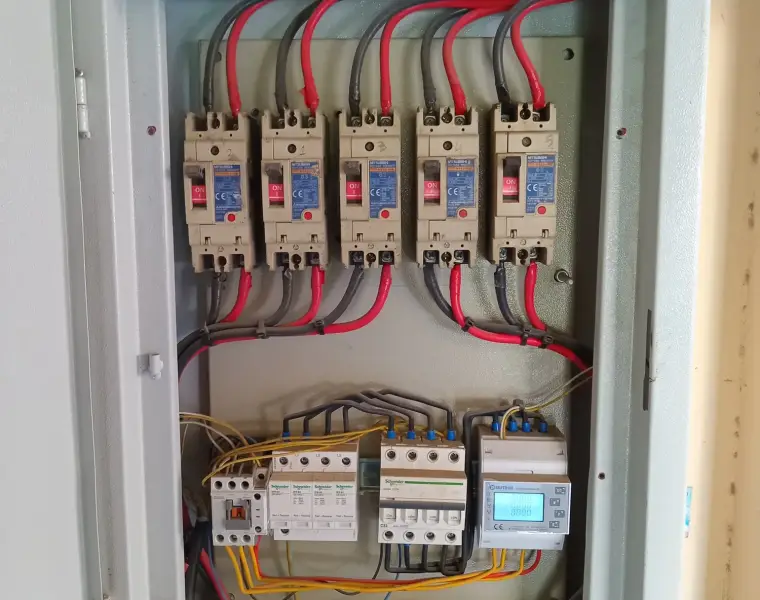
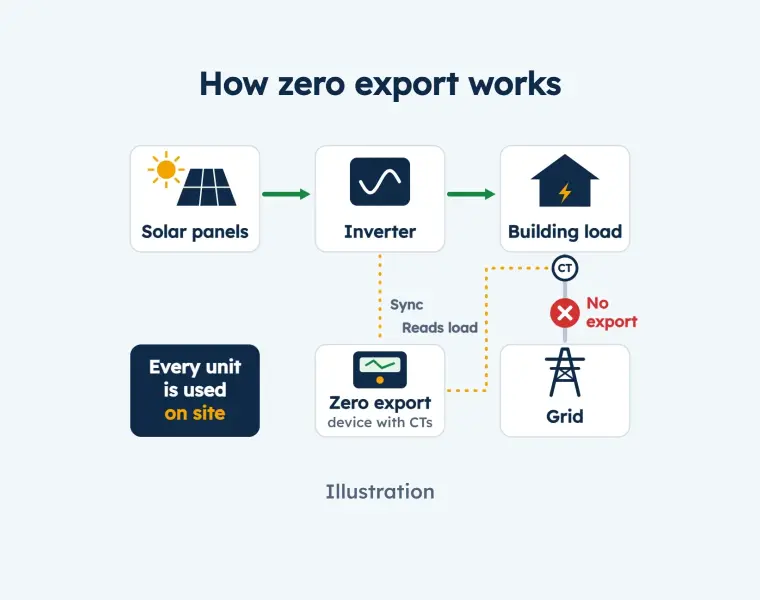
A zero export system stops your inverter from sending surplus solar power into the grid. The inverter reads a smart meter at your main supply and adjusts its output to match what your building is using, second by second, so every unit it produces is used on site.
SunnyPath Energy sets up zero export on homes, shops, commercial buildings and factories, from small systems to large commercial and industrial inverters, on new installations and on systems another company installed.
Why Zero Export Makes Sense in 2026
Under NEPRA's Prosumer Regulations 2026, a unit you export earns around Rs. 8 to 11, while a unit you import costs Rs. 55 to 65 or more. Sending power to the grid is now worth a fraction of using it yourself.
Zero export makes sure your system works for your own load. It also suits connections that can't get net billing, such as homes, buildings still waiting for approval, and factories that would rather not wait on a DISCO process at all.
Every Inverter Brand, Every Zero Export Device
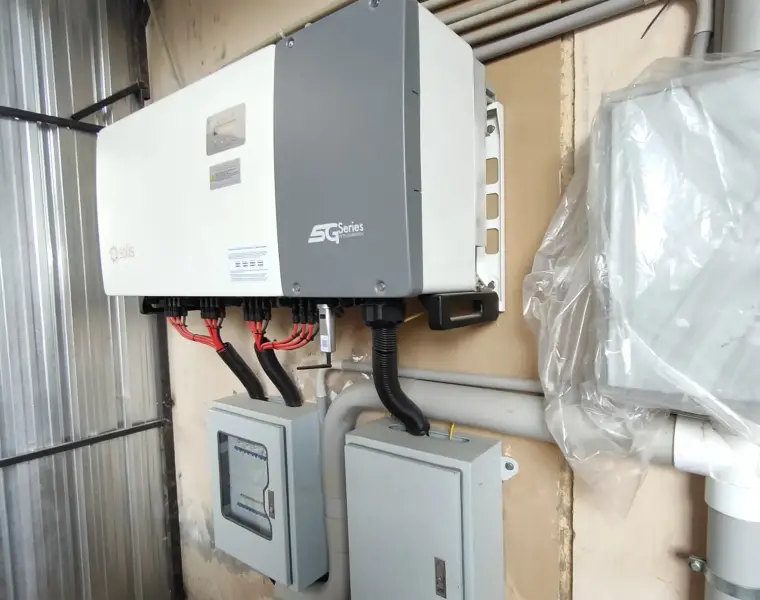
We set up zero export on Huawei, Solis, Growatt, Sungrow, GoodWe, Deye, Fox ESS, Sofar, SAJ, INVT, Chint, Auxsol, Fronius, SMA, Inverex, Knox, Ziewnic, Crown, MaxPower, Fronus, Itel and SolarMax inverters. On the meter side we work with Chint DTSU666 and DDSU666, Eastron SDM630, SDM120 and SDM72, Acrel, and the manufacturers' own smart meters and power sensors, and we know which device each inverter model actually supports. SunnyPath Energy is a Partnered AEDB Certified (Category C1) solar EPC company with 550+ systems installed across Pakistan and 225+ inverters repaired.
Zero Export Set Up Wrong?
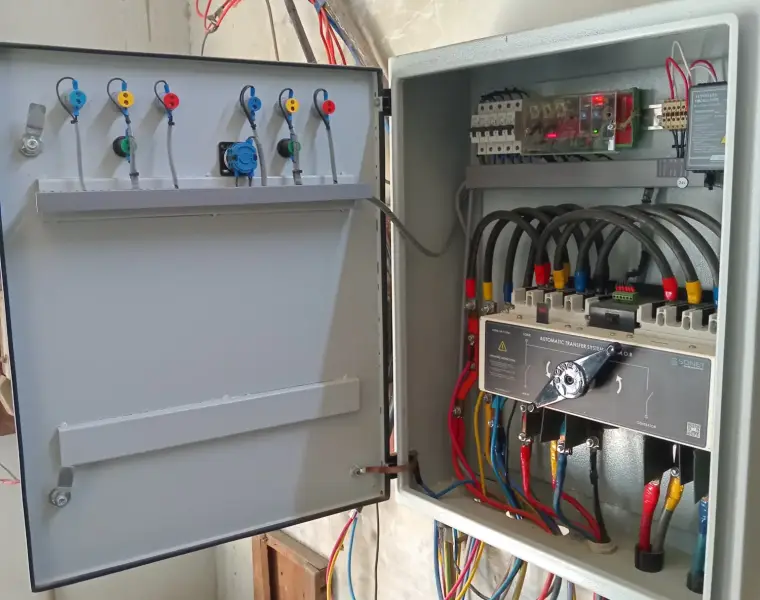
Zero export that does not hold at zero is almost always a wiring or settings problem: a CT clamped the wrong way round, phases mixed up, the wrong meter address or communication settings, or a meter the inverter does not support. If your inverter still exports, or keeps cutting its output for no reason, our inverter team finds the cause on site.
How We Set Up Zero Export
Export Limiting for Homes, Businesses and Factories
Every zero export job follows the same steps, whichever inverter you have:
- Check the inverter. Model, firmware and the meters it supports for export limiting.
- Choose the meter. A Chint, Eastron or brand smart meter, single or three phase: direct-connected for smaller supplies, or with CTs for large commercial and industrial loads.
- Install at the grid point. The meter or CTs go on your main incoming supply, so they see everything the building draws.
- Wire the communication. RS485 between meter and inverter, with the right address and settings.
- Set the limit. Zero export, or a fixed export limit if you want one.
- Test under load. We switch loads on and off and confirm the inverter follows them without exporting.
Most jobs take 1 to 2 days. The price depends on your system (inverter size, single or three phase, the meter and CTs it needs and the cable run), so it is quoted once we know the inverter model. Need a new inverter as well? See the inverters in our shop.
Manufacturer sites: Huawei, Solis, Growatt and Sungrow, and meter makers Chint and Eastron. The export rules are set by NEPRA.
Better Data in Your App, Too
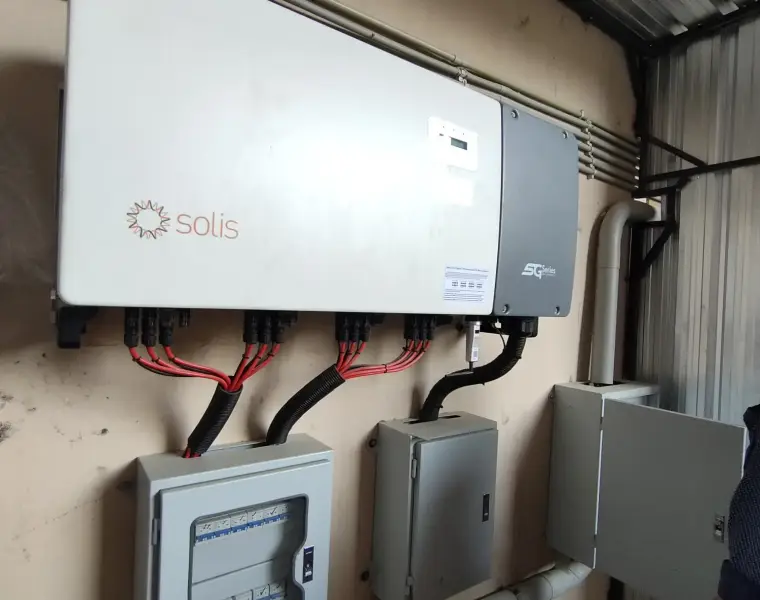
The smart meter does more than stop export. With it connected, your inverter's app (FusionSolar, SolisCloud, ShinePhone, iSolarCloud, SEMS and others) shows what your building is consuming and what it imports from the grid, not only what the panels produce. That is the data you need to see whether your system is sized right, and when it is time to add panels or a battery.
Zero Export or Net Billing?
If you have a three phase connection and export a lot during the day, net billing can still pay something back. If you use most of your solar yourself, or can't get net billing, zero export is usually the better fit. We look at your load and your K-Electric bill and tell you plainly which one suits you.
Your Solar Journey in 4 Steps
Effortless Solar Journey with SunnyPath Energy in 4 Simple Steps
-
Step 1
Book a Survey
We visit your property to assess roof orientation, shading, structural condition, and your actual electricity usage before recommending anything.
-
Step 2
Get a Quotation
A detailed quotation based on your survey, sized to your usage, not a generic package, with transparent system specs and Tier-1 equipment named upfront.
-
Step 3
Installation
2 to 5 days on-site for a typical residential system, Tier-1 panels and inverter installed, tested, and commissioned before we call the job done.
-
Step 4
Enjoy Savings
Ongoing generation monitoring and 1.5 years of free after-sales support, so savings continue long after installation day.
Client Reviews
Words from Our Clients
SunnyPath Energy is rated 4.9 out of 5 from 15 reviews on Google.
Questions About Zero Export
Related reading: Net Metering vs Net Billing in Karachi 2026: Is Solar Still Worth It?
Frequently asked questions
01What is a zero export solar system?
A zero export solar system uses a smart meter at the main supply to stop the inverter sending power into the grid. The inverter reads the meter and adjusts its output to match the building's load, so all the solar it produces is used on site.
02Do I need zero export if I don't have net metering?
In most cases, yes. Without an approved net metering or net billing connection, the units your system exports earn you nothing, and K-Electric and the other DISCOs expect a system without that approval not to export. Zero export keeps the system to what you actually consume.
03Which inverters support zero export?
Most modern on-grid inverters support zero export with a compatible smart meter or CTs. SunnyPath Energy sets it up on Huawei, Solis, Growatt, Sungrow, GoodWe, Deye, Fox ESS, Sofar, SAJ, INVT, Chint, Auxsol, Fronius, SMA, Inverex, Knox, Ziewnic, Crown, MaxPower, Fronus, Itel and SolarMax inverters, and checks which meter your exact model supports first.
04Which zero export meter do I need, Chint or Eastron?
The right meter depends on your inverter model. The most common are the Chint DTSU666 (three phase), the Eastron SDM630 (three phase) and SDM72, Acrel meters, and the inverter brands' own smart meters. SunnyPath Energy matches the meter to what your inverter supports.
05Does zero export need CTs?
Zero export needs CTs when the supply current is too high for a direct-connected meter, which is typical for large commercial and industrial systems. Homes and smaller businesses can usually use a direct-connected meter. SunnyPath Energy decides this when it checks your supply.
06How long does a zero export setup take, and what does it cost?
A zero export setup usually takes 1 to 2 days. The price depends on the system: inverter size, single or three phase, the meter and CTs needed and the cable run. SunnyPath Energy quotes it once it knows your inverter model.
07Can zero export be added to an existing solar system?
Zero export can be added to most existing on-grid systems, including systems installed by another company, as long as the inverter supports a meter for export limiting. If yours does not, SunnyPath Energy explains the options.
08Will zero export reduce my solar savings?
On a system sized to your own load, zero export holds back very few units, and every unit you use yourself is worth the full import tariff of Rs. 55 to 65 or more, against around Rs. 8 to 11 for an exported unit under net billing. If your system regularly makes far more than you use, a battery or net billing may suit you better.