

Single Phase vs Three Phase Solar System Karachi — What Nobody Tells You Before You Buy
The single phase vs three phase solar system Karachi homeowners choose is the most important decision before any installation — and most people don’t even know they need to ask it. People shopping for solar ask about panel brands, inverter warranties, and system size. Very few ask the one question that actually determines how much money their solar system saves them long-term: is my home single phase or three phase?
Your answer to that question changes everything — the inverter you need, the system size that makes sense, and whether you can do net metering with K-Electric at all. Get this wrong before installation and you could spend 15 lakh on a system that never reaches its potential.
How to Check Which Connection You Have
There are three quick ways:
Look at your K-Electric bill. Your bill states your connection type. You’ll see either 1-Ph (single phase) or 3-Ph (three phase) listed in the tariff details.
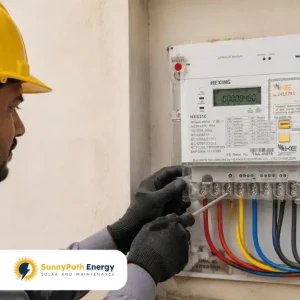
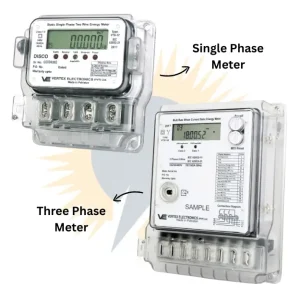
Look at the electric meter itself. Single phase and three phase meters are physically different — you can tell just by looking at the meter installed at your premises. When a SunnyPath team visits for a site survey, this is the first thing we check.
Call or visit your K-Electric office. They can confirm your connection type against your customer account instantly.
What Most Karachi Homes Have
Approximately 80% of residential homes in Karachi are on single phase connections. Three phase connections are less common in residential settings — they’re typically installed based on load requirements. If your home has heavy electrical loads, or if you applied for a three phase connection, you may have one. You can also apply for a three phase connection even if your current load doesn’t require it, provided you go through K-Electric’s process.
The point is: don’t assume. Check first. Many homeowners with three phase meters don’t know they have them.
Single Phase vs Three Phase Solar System Karachi: The Net Metering Rule That Changes Everything
Here is the fact that most solar companies in Karachi don’t put front and centre:
Net metering with K-Electric is only available for three phase connections. Single phase connections cannot apply for net metering, no exceptions.
Net metering is the system where your solar panels push surplus units back into the K-Electric grid and your monthly bill gets credited for those exported units. It’s what turns a solar system from a daytime electricity saver into a full bill elimination tool. For the official policy, refer to NEPRA’s net metering regulations.
If you have a single phase connection and no plans to upgrade, net metering is simply not on the table. Your system saves you money during the day. At night you’re back on K-Electric.
If you have a three phase connection and you’re not doing net metering, you’re leaving money on the grid every single day.
A Real Example from Our Work in Karachi
We were recently referred to a client whose neighbour had a 12kW three phase solar system installed by another company. The system wasn’t performing as expected, there were generation issues, and nobody had sorted out the root cause.
When our team assessed the installation, we found commissioning errors and load imbalance across the three phases. The system was running but not optimised. We corrected the load balancing and got the system performing properly.
But there was something bigger: this client had a 12kW three phase system, a three phase meter, and had never applied for net metering. Not because they didn’t want to — nobody had walked them through it.
A 12kW system in Karachi generates approximately 48 to 60 units per day. If a household is consuming 20 to 25 units during daylight hours, 25 to 35 units were going nowhere every single day. At K-Electric’s current export credit rate of Rs. 10 to 14 per unit (average around Rs. 11), that’s Rs. 8,250 to Rs. 11,550 in monthly bill credits they were not receiving — every single month.
We are now handling their net metering application. That’s the difference between a solar system that reduces your bill and one that eliminates it.
Single Phase Solar: Who It Makes Sense For
A single phase solar system is the right fit when your home has a single phase K-Electric meter and you want to reduce your electricity consumption during the day, combined with a lithium battery for night coverage.
Panels cover your daytime load, the battery stores excess generation and powers essential appliances at night. You are not connected to the K-Electric grid for export — you operate independently, which works well for homes with single phase infrastructure.
Single phase inverter brands available in the Karachi market:
| Brand | Notes |
|---|---|
| Ziewnic | Very popular, affordable, strong local support network |
| Inverex | Top of the list, good warranty, widely available |
| Solis | Reliable, good monitoring, solid performance |
| GoodWe | Good price-to-performance ratio |
| Fronus | Budget-friendly option |
| Itel | Entry-level option for tighter budgets |
Single phase inverters range from 1.5kW up to 8kW or 10kW, giving you flexibility across a wide range of budgets and system sizes.
Single phase system pricing (Karachi market, June 2026):
| System Size | Approximate Total Cost |
|---|---|
| 5kW Single Phase (with battery) | Rs. 7 lakh to Rs. 9 lakh |
| 10kW Single Phase (with battery) | Rs. 11 lakh to Rs. 15 lakh |
Includes panels, inverter, mounting structure, DC and AC wiring, installation, and standard battery.
Three Phase Solar: Who It Makes Sense For
A single phase vs three phase solar system Karachi decision comes down to your meter type. If you have a three phase K-Electric meter, go three phase and take full advantage of net metering.
Here’s something that surprises many people: you don’t have to install a full 10kW panel system to go three phase. You can install a 5kW panel system on a 10kW or 12kW three phase inverter from day one. When you’re ready to expand, you simply add more panels — you don’t touch the inverter. That’s a Rs. 2 to 3 lakh expansion instead of a full system replacement.
There are no three phase inverters below 10kW in the Pakistani market. A three phase installation starts with a 10kW inverter as the minimum. But that 10kW inverter is also your future expansion headroom built in from day one.
Three phase inverter brands available in the Karachi market:
| Brand | Type | Notes |
|---|---|---|
| Solis | Hybrid | Our top recommendation for three phase hybrid systems |
| Sungrow | Hybrid / On-grid | Premium option, excellent monitoring and performance |
| GoodWe | Hybrid / On-grid | Reliable, good price-to-performance |
| Inverex | On-grid | Strong local support |
| Growatt | On-grid | Good value for three phase on-grid setups |
Three phase system pricing (Karachi market, June 2026):
| System | Configuration | Approximate Total Cost |
|---|---|---|
| 5kW panels + 10kW inverter | Three phase hybrid | Rs. 12 lakh to Rs. 18 lakh |
| 10kW panels + 10kW inverter | Three phase hybrid | Rs. 15 lakh to Rs. 19 lakh |
| Expand 5kW to 10kW (panels only) | Just adding panels | Rs. 2 lakh to Rs. 3 lakh additional |
The Net Metering Numbers: What Three Phase Actually Earns You
The actual numbers for a 10kW three phase system in Karachi:
- Daily generation: 40 to 50 units
- Typical daytime household consumption: 15 to 20 units
- Units exported to grid daily: 20 to 30 units
- Units exported monthly: 600 to 900 units
- K-Electric credit rate: Rs. 10 to Rs. 14 per unit (average Rs. 11)
- Monthly bill credit: Rs. 6,600 to Rs. 9,900
- Annual credit value: Rs. 79,200 to Rs. 1,18,800
A household paying Rs. 40,000 to Rs. 50,000 per month on electricity can realistically bring that bill toward zero within 3 to 4 years. A single phase system reduces your bill. A three phase system with net metering has a clear path to eliminating it.
What About Upgrading from Single Phase to Three Phase?
It’s possible, but it requires patience. K-Electric doesn’t simply approve phase upgrades on request. They conduct a survey to assess whether your premises genuinely needs a three phase connection. The process can take several months, and there are connection fees involved.
Complete the upgrade first, receive at least one K-Electric bill under your new three phase meter, and then apply for net metering. Both steps need to be in order before you can start exporting to the grid.
The Most Common Mistake We See
The biggest single phase vs three phase solar system Karachi mistake we see: having a three phase meter and installing a single phase system.
Single phase is cheaper upfront, and some installers don’t explain the net metering implication clearly enough. The homeowner agrees because the quote looks better, but they’ve permanently walked away from net metering eligibility. If you have a three phase meter, a three phase system is almost always the right call. The higher upfront cost pays for itself through monthly bill credits. That’s not a sales pitch — it’s arithmetic.
Quick Comparison: Single Phase vs Three Phase Solar System Karachi
| Single Phase | Three Phase | |
|---|---|---|
| Availability in Karachi | ~80% residential | Load-based, anyone can apply |
| Net metering | Not available | Available |
| Minimum inverter size | 1.5kW | 10kW |
| 5kW system cost | Rs. 7 to 9 lakh | Rs. 12 to 18 lakh |
| 10kW system cost | Rs. 11 to 15 lakh | Rs. 15 to 19 lakh |
| Future expansion | New inverter needed | Just add panels |
| Best outcome | Daytime savings + battery backup | Full bill elimination via net metering |
Not Sure Which Single Phase vs Three Phase Solar System Karachi Needs?
Send us a photo of your K-Electric bill or your meter. We’ll tell you exactly what connection you have and what system makes sense for your situation — no obligation, no sales pressure.
SunnyPath Energy
📞 +92 306 2948694 | +92 344 7654540
✉️ hello@sunnypathenergy.com
Also read: Solar System Price Karachi 2026 — Complete Cost Breakdown
Also read: Why Solar System Output Drops Karachi — The Real Reasons After 1-2 Years
Also read: Solar System Installation in Karachi
Also read: Solar Maintenance & AMC Karachi
Prices reflect Karachi market rates as of June 2026 and are subject to change based on panel and inverter availability.
